Author Archives: chuckredman

Almost 500 pages but worth it

The Bailiff’s wife looked at him as if half expecting that he was about to ask her for something, whereupon the soul within her receded like a star, far out into the frozen wastes of infinity, and only the cold smile remained on earth.

Halldór Kiljan Laxness 1955.jpg

Independent People, by Halldor Laxness (Nobel Prize winner, 1955), is one of the foremost sagas of rural family life. It is the life and times of Bjartur, an Icelandic peasant who becomes a landowner and a human metaphor for mankind’s struggle against nature, hunger, and human evolution itself. Written and translated with such poetic realism, the book makes its reader feel like an honorary Icelander—and not a city-dweller but a citizen of the endless, inhospitable moors.

Interview last night on “The Writer’s Block”

It was an honor to have a chance to be interviewed last night on LA Talk Radio’s show “The Writer’s Block”.

Host Jim Christina and co-host Russ Avison kept me laughing and talking about my book “A Cottonwood Stand”. Here is the link to the podcast. Thanks!

https://l.facebook.com/l.php?u=http%3A%2F%2Fwww.latalkradio.com%2Fcontent%2Fwriter-022819%2520%3Ffbclid%3DIwAR1IJzmgMA44tVQQfSzWm269y1YFvQ-Wd_tOyvtZ8l7OYAU_Rb6QKbvwEGU%23audio_play&h=AT1v5rmY083kFhFH7AJm3btS5t9jkDOT6mofNj1zwlvX7pr6VI1Ot6mFyKH6oznavl-x-d5rQJw9GZczqNeATnGzRHroPU03DiPOtecf5gYIh1lub_bJ3e5K8yfz5tPJOgE

Sisterhood

Two fine feminist novels from two of the Bronte sisters. Both novels extraordinarily ahead of their time and written with that Bronte elegance of prose that is practically unmatched. And both novels relatively unknown, or at least unappreciated. And my reading both of them within a six month window (and usually within six feet of a window) was unplanned and unexpected. But I am quite unsorry.

Shirley was the novel that Charlotte Bronte (I don’t have those two little dots) published next after Jane Eyre. Naturally Shirley was a bit overshadowed by her older “sister”. And she was a less romantic novel, and less cohesive and way less compelling. Well, Charlotte had just lost a brother and two sisters to illness, which should account for some shortcomings in her written work product. But Shirley was, I think, a more feminist novel than Jane, which is saying something. Shirley, the title character, was a strong-willed independent and outspoken woman. Caroline was her friend, and Caroline was quiet and cautious. But not a pushover. They shared a romantic interest, Robert. Guess which one won. I’m not telling. You have to read the book. That’s not a heavy burden, it’s a beautiful novel, with plenty of themes besides feminism: friendship, love, political and economic struggle, human decency. It deserves to have the Bronte name on it.

The Tenant of Wildfell Hall was one of Anne Bronte’s novels (Anne was the youngest sister), and the title character could possibly be called the Mother of Modern Feminism. I don’t have the historical facts to back that up, that’s just my gut feeling about how amazing this book was for its time. The reason I got the book from the library is that my sister and brother-in-law loaned us a DVD of the movie and I wanted to read the book first. We haven’t watched the movie yet. Maybe Thursday. Anyway, The Tenant of Wildfell Hall should have made Anne just as famous as her sisters, but it didn’t. It has romance, but that’s not the main thrust of it. It’s really a social and psychological study of three characters, this time two men and one woman. The romance isn’t triangle shaped, it’s a line. Helen, the woman in the middle, is the Tenant. And, though she doesn’t know it, for my money she’s a heroic feminist of the first order. The reason she doesn’t know it is that she’s too busy dealing with the Victorian male chauvinist system and a husband whose character was inspired by the dissolute life and death of Branwell Bronte, Charlotte and Anne’s only brother.

I haven’t mentioned Emily. I read her book in college. Even though this little essay doesn’t give equal time to her book, I don’t think we have to feel too sad about where she stands in the halls of literature. She’s right up there with her sisters.

Tess of the d’Urbervilles would understand

I’m an evolved human. I don’t like to acknowledge it. But I need milk to feel good. For protein and calcium milk is the best. Not from factory farms but from contented cows. From Flossie and Bossie down in the dell with cowbells on, who are milked, by gentle milkmaids, only when they need it. And who live a better overall life than I do. That’s the kind of milk I want.

Where can I find it?

Health and Wellness

It’s obvious to me that the only natural way to get whiter teeth is through diet and nutrition. Therefore, I am going on an all-white diet. I will only eat white foods: yogurt, white bread, white potatoes, cauliflower, egg whites, mozzarella, hominy grits, white chocolate, and jicama. 

I made a delicious white rice, white bean, and cottage cheese casserole. I expect to see visible improvement up to three shades whiter in just 7 days. Or my money back. . . . Just kidding. 7 days is an arbitrary number. Make it 10.

Could it have been San Tropez? Or maybe the 99 cent store on 10th Street.

Lately this odd thing has been happening: people look familiar to me in many places that I go. Not everywhere and not every face. But even in places I have never been before, seeing people I know have never crossed my path, I seem to instinctively recognize certain faces from some prior place and time, yet without a clue as to where or when.

The Face Is Familiar - title.jpg

Is this because (a) my brain is going, (b) my eyesight is going, or (c) I’ve lived so long that I really have seen all these faces (or near-lookalikes) somewhere before?

I’m kind of hoping it’s (c). (a) and (b) are the types of things that make you want to stop going places. I like going places.

It makes the world go round

The city has its cunning wiles, no less than the infinitely smaller and more human tempter. There are large forces which allure with all the soulfulness of expression possible in the most cultured human. The gleam of a thousand lights is often as effective as the persuasive light in a wooing and fascinating eye.

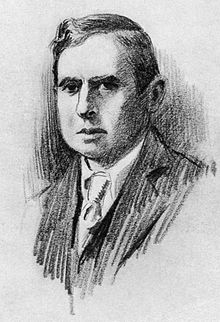
We are pawns and puppets. We are pawns of economic forces, we are puppets of misery and want. In his groundbreaking novel Sister Carrie, Theodore Dreiser writes about American capitalism and what it does to its subject citizens. We are pawns and puppets, we make choices but our choices are determined by capitalism and the steel grip it has upon our shoulders. We have basic urges that control us, we want what we see that others have, we want what we admire, what we think we need. We want things we cannot have, and once we obtain them they no longer matter to us. We worship idols, we are impressionable as lambs.

Dramatizing the power that money, or want of money, exerts over us, Dreiser’s novel, published at the dawn of the 20th Century, was one of the early American novels written from a working class perspective and focused upon the class struggle. Following in his footsteps were books like Jews Without Money by Mike Gold, A World to Win by Jack Conroy, Studs Lonigan by James T. Farrell, and the works of Steinbeck and John Dos Passos.

The story that Dreiser employs to dramatize his political theme is a love triangle—a young woman named Carrie and two established gentlemen. This sounds conventional enough in many ways but from Dreiser’s angle the love affairs are seen as economic more than romantic. They illustrate how the class struggle shapes our most intimate feelings, usually without our being aware. Dreiser takes us on a rags to riches and riches to rags journey. The bare plot sounds like melodrama, but it’s actually realism. The narration gives us in tiny detail all the circumstances motivating our three lovers, and even some of the minor characters. And, among those motivators, money is paramount.

Some of Dreiser’s prose may sound a bit stiff to our ears, and his characters’ frequent streams-of-consciousness tend to flow for many paragraphs. But his dialogue contains the rich, quirky vernacular of the times, and helps to counterbalance the above imperfections. There is great power in Sister Carrie, and its relevance as a working class novel is no less obvious today than in Dreiser’s own time.

An Intimate Journey

In social situations, I often see myself as the last planet in our solar system. Like the theoretical Planet X, I revolve around the periphery, I take longer than anyone else to get around, and, even if I’m part of their system, no one else knows for certain whether I exist.

It takes three things to make a good memoir: interesting life experiences, deep insight (see above excerpt), and the ability to narrate with eloquence and honesty. In They Only Eat Their Husbands (a reference to a certain species of spider), Cara Lopez Lee gives us all three ingredients of great memoir.

Her early life, marked by parental neglect, abuse and abandonment, was one that few individuals could come through unscathed. In a sense, the memoir had to be written, if for no other reason then for the cathartic relief of getting all that hurt from childhood out and onto a printed page. But Cara Lopez Lee writes her story with such insight, eloquence and honesty that the finished product is a work of art, as well as a brilliant statement about life and love. There is humor in her writing (note the title), there is keen imagery. And ultimately this personal narrative, by an accomplished world-traveling journalist, author and editor, gives us an overriding truth. It’s the truth we need to know about confronting emotional pain and building strength of character upon it. And then getting to the part of life that brings satisfaction and self-acceptance.

Not my “Favourite”

I was expecting farce, but I wasn’t expecting gratuitous sex and violence. The farce would have been fine, but it was despoiled by the constant intrusions of sex and violence, neither of which was portrayed with any real human reactions, like love or compassion.

The Favourite” was meant to be a farce about the British monarchy, in a turbulent period, around 1700. It shows the pettiness, the hypocrisy, the double-dealing, the ineptitude of the monarchy. These are all appropriate themes for farce.

Sex and violence, however, are many things but are never funny. They cannot be made farce of. When I say sex, I don’t mean love, romance, or even infidelity. I mean the sex acts themselves that most people prefer to keep private. Violence? You know what I mean.

Crudities, obscenities, grotesqueries, these can be necessary elements if they’re related to the characters or the story. In that case, they deserve to be treated seriously. “The Favourite” gave us crudity and grotesquery in almost every scene, but for no apparent cinematic reason other than trying to make us laugh at things that are inherently unfunny. The producers have, I suppose, succeeded in creating a sensation and padding their box office receipts, though.

Oh, the picture will win lots of awards, despite being (in my opinion) mostly trash. But go see something better, infinitely better: go see “The Green Book”. That remarkable film had disturbing violence and even some sexual themes, but there wasn’t a single word or image that didn’t belong there and there was nothing to diminish the film’s impact, its mission. When the final credits came on I wanted to stay until the very last line. And savor.

I can’t say that about “The Favorite”: I wished I had walked out after the first thirty minutes.

“Thank heaven, for . . .”

Her gaze wandered over Paris, over the sky from which the light drained a little earlier each day, with an impartial severity which possibly condemned nothing.

We saw the movie, recently, about her, and decided we wanted to read one of her books. We had never heard of Colette. But it turns out that we were very familiar with her work. Gigi is one of my wife’s favorite movies. And when I was a kid and began learning to play the cornet, the title song of Gigi was one of the songs in my head that I longed to hear coming out of the bell of my instrument.

So from the library we got Colette’s volume containing her short story Gigi and her short novella The Cat. Reading this mere sample of Colette’s work does not make us experts. It only makes us fans. Here are some thoughts from a fan:

Gigi is a charming story, the movie tracked it pretty closely, just adding a few scenes and characters and a perfect musical score. With refreshing realism and sweet undertone of satire, Colette wrote a story of what one publisher refers to as “the politics of love”. That interesting phrase seems to be a good label for the story, which I would probably have called a comedy of manners. But labels don’t do justice to the story, which is a very special sketch of a very unique romantic entanglement created by the moral ambiguity of early 20th Century Paris. I finished the story with the sudden realization that I had just read a fine piece by a writer of underestimated talent. The Cat did nothing to dispel that opinion and only cemented it.

The Cat gives new meaning to the term “cat lover”. It is a sweet portrayal of human weakness and shortcomings, including awkwardness, jealousy and mistrust between lovers. Colette painted the portrait with a keen sense of observation. And, assuming that the translation is true to the original*, she wrote in language of such rich color and impressive depth that I will keep some of her work in the little gallery in my head where I try to collect bits of artistry, bits of intelligence that may not be masterpieces to others but are priceless to me.

*My brother-in-law could tell me. He used to teach French.

Our priorities . . .

The latest technology in home air fresheners: Glade(R) Plugins(R) Scented Oil Customizables(TM) Warmer lets you alternate daily between any two of your favorite fragrances. Dozens of luscious fragrances available.

The latest technology in preventing devastating wildfires:

wildfire aftermath

One Flew East, One Flew West

“What the Chronics are—or most of us—are machines with flaws inside that can’t be repaired, flaws born in, or flaws beat in over so many years of the guy running head-on into solid things that by the time the hospital found him he was bleeding rust in some vacant lot.”

Counterculture icon Ken Kesey

I was sitting in the backyard reading the closing chapter of a book. I sat under our dying apple tree where many flowers flourish and hummingbirds buzz right past your head. I looked up between paragraphs and there was a little bunny looking directly at me, not seven feet away. It was looking at me like it wanted to be friends but didn’t know how to start the conversation without sounding awkward. Neither did I. Before I could say something warm and endearing, it turned tail and scampered. The book I was reading was One Flew Over the Cuckoo’s Nest. I don’t know if there’s any significance. Somehow it seemed like the right book to be reading at that moment.

And I hadn’t decided to finally read the book this year because of little rabbits or because I was only waiting for the point at which our political system turns into a national madhouse. No, sometimes I just like to save good things for later. Like a reward, sort of, for being patient.

So what can one say about Cuckoo’s Nest that hasn’t been said already, except “Yup, it’s a great novel. You guys were right.” And I already knew they were right, from having seen the movie when it first screened back in 1975. Jack Nicholson gave a performance like nothing else I’ve ever seen. But most of the credit goes to Ken Kesey. He created R.P. McMurphy, and if there’s a more unforgettable character in all of American literature, let him or her swagger forward. Or, to use his own words, “I’ll eat my hat.”

Another unforgettable character is the narrator. Chief Bromden, tormented by memories, fears and visions, plays a small and silent part in the plot, but is otherwise a keen fly on the wall of the mental ward. The Chief is especially obsessed with McMurphy and the social whirlwind he stirs up in the ward. The Chief’s own mental state, already vulnerable, is caught up in the whirlwind. His impressions, his sometimes streaming consciousness, are racked by machine imagery and terror of something he calls the Combine—a huge greedy corporate/police apparatus that seems to be his personal metaphor for oppression of the working class. Kesey, only twenty-six when he published Cuckoo’s Nest, came straight from a working class environment himself.

Politically correct Kesey is not: women and numerous minorities don’t come out looking too good in this novel. But Kesey isn’t asking you to judge them in a vacuum. He wants you to see everyone, all their cruelty, the pettiness, the weakness, as products of the Combine. And he wants you to see Randle Patrick McMurphy, his fearless individualism and his rowdy zest for life, as the last, best hope for shutting the ugly thing down once and for all.

In case I wasn’t clear before about how I really feel about this book: If you believe there’s an American novel that soars any higher or morally overshadows Kesey’s Cuckoo’s Nest, it better be something by Steinbeck.

Where have you been all my life?

“I’ve always thought,” I said, “that anyone who makes someone else doubt the foundations of his morals hasn’t lived in vain.”

Our daughter loaned us the book. My wife and I both read it. I had never heard of Marguerite Duras. I am glad to have crossed paths with her at last. The Sailor From Gibraltar is an odyssey of sorts, and a strange kind of love story. A nameless disenchanted bureaucrat becomes infatuated with a woman pursuing an endless voyage to find a lost lover. Both loves are one-sided, obsessive, and blind. At the deepest level, the novel is a study in philosophy and psychology. It charts the murky depths of love and, certainly, life as well.

Written and translated in tough, lean prose, the book is a search for something that doesn’t exist. The story and its characters are full of contradictions. They don’t know their own minds—or hearts. And that’s what ultimately touches ours.

“Trip Wires”, a new story collection by Sandra Hunter

“She drowsed and wakened. Surely someone would find them. Was it better to be shot than to watch her child starve? In the cold, she held him close, and he slept and woke through the night, sucking at her dry breasts.”

In her new story collection Trip Wires, Sandra Hunter has an uncanny ability to get inside the heads of ordinary people caught in the widely-scattered wars that have defined, tragically, the beginning decades of this millennium. These are the ones who can get out and the ones who can’t. These are ordinary people who, in desperation to survive, do extraordinary things.

Their stories are disturbing. With harrowing realism Hunter shows us their poverty, their scars, their journeys, their nightmares, their courage. And sometimes their humanity. The above excerpt comes from the story “Borderland”. That story is a full-force punch to the gut, depicting a young mother fleeing a nameless war in a lifeless land. But the young mother discovers human kindness in places and proportions that no one could imagine.

These stories are not for the faint of heart, and it is natural for us to avoid emotional “trip wires” that unleash the shocks and horrors of war. But the suffering is real and, lying just beneath the surface of our world, we can’t avoid it forever. Maybe, with the insights of authors like Sandra Hunter, we can learn why we need to urgently defuse those senseless conflicts that have booby trapped our present and maybe our entire future.

“A Blue Sky Like No Other”: a one-man play by Steve Fetter

Steve Fetter’s one-man play is a moving tribute to the World Trade Center first responders who sacrificed everything to save others. With both sorrow and humor he describes his first-hand experiences with such eloquence that we can almost feel what he felt that fateful day seventeen years ago. He goes on to describe the impact that those events have had upon him and his life. Beautifully and seamlessly written, staged and performed, A Blue Sky Like No Other is a 9-11 tribute like no other that I have seen.

Available on Amazon Prime at https://www.amazon.com/Other-remembrance-before-during-after/dp/B07H9H7Y7H/ref=sr_1_1?ie=UTF8&qid=1538516471&sr=8-1&keywords=steve+fetter

Advice offered as from a wise old uncle

Listen, Judge Kavanaugh, I know where that anger is coming from. It’s pain, man, and you don’t need that, nobody needs that. You gotta let it go, man, it’s time. You don’t wanna suffer the rest of your life, it’s not worth it.

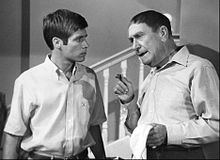
Don Grady William Demarest My Three Sons 1969.JPG

Whether you’re on the Supreme Court or not, you don’t wanna be bitter and angry the rest of your life. That’s no life. There’s only one thing to do, you gotta do this: You gotta face up and let it out. You gotta come to terms with what you did and you gotta let it out. You gotta get some therapy, man, and come to realize that kids do dumb things because they’re kids. Drinking, peer pressure, total immaturity, all those factors. But 98% of them grow up and grow out of it and that’s exactly what you did. You matured, you left those behaviors behind. I know, I worked in Juvenile Court for a number of years and I learned that kids are kids and they do a lot of rotten things because they’re kids and their brains and hormones are like refried beans and hot sauce and nearly all of them grow out of it when that magical thing called maturity (or indigestion) takes hold. You are a perfect case in point.

Sometimes, though, character becomes an issue and the memories are still there and the pain is there and you gotta deal with it. That’s where therapy comes in. And honesty, including honesty with yourself. It’s the only way. The only way to peace of mind. Life is too short, man, nobody needs that kind of thing hanging over their head. The guilt. It’s not too late. It’s the perfect time. Take a deep breath. It’s not too late for Justice Thomas, either. With all due respect, he could finally find some happiness, some peace of mind, some joy even, if he just opened up and finally came to grips with what he did, and what he denied. You don’t wanna be a bitter, angry judge for all those years, nothing could be worse. I have a feeling that, if you face up to your past with courage and honesty and come to terms with it, you could be a pretty decent Supreme Court Judge. Way too conservative, of course, but decent and reasonable and compassionate.

And you might be surprised at how forgiving people can be. Forgiving to those who have hurt them and forgiving to themselves. Boy, it’s the best thing. But you can’t force it.

I wish you luck.